Physics A Level

Physics A Level

The Physics A Level course at Queen Mary’s College will allow you to explore the fundamental principles of physics, from measurements and particles to waves, mechanics, electricity, and nuclear physics. This course not only cultivates strong logical, numerical, and problem-solving skills but also opens doors to diverse career opportunities, whether in engineering, medicine, environmental science, or other fields. No matter what interests you have, there is an area of Physics for you at QMC.

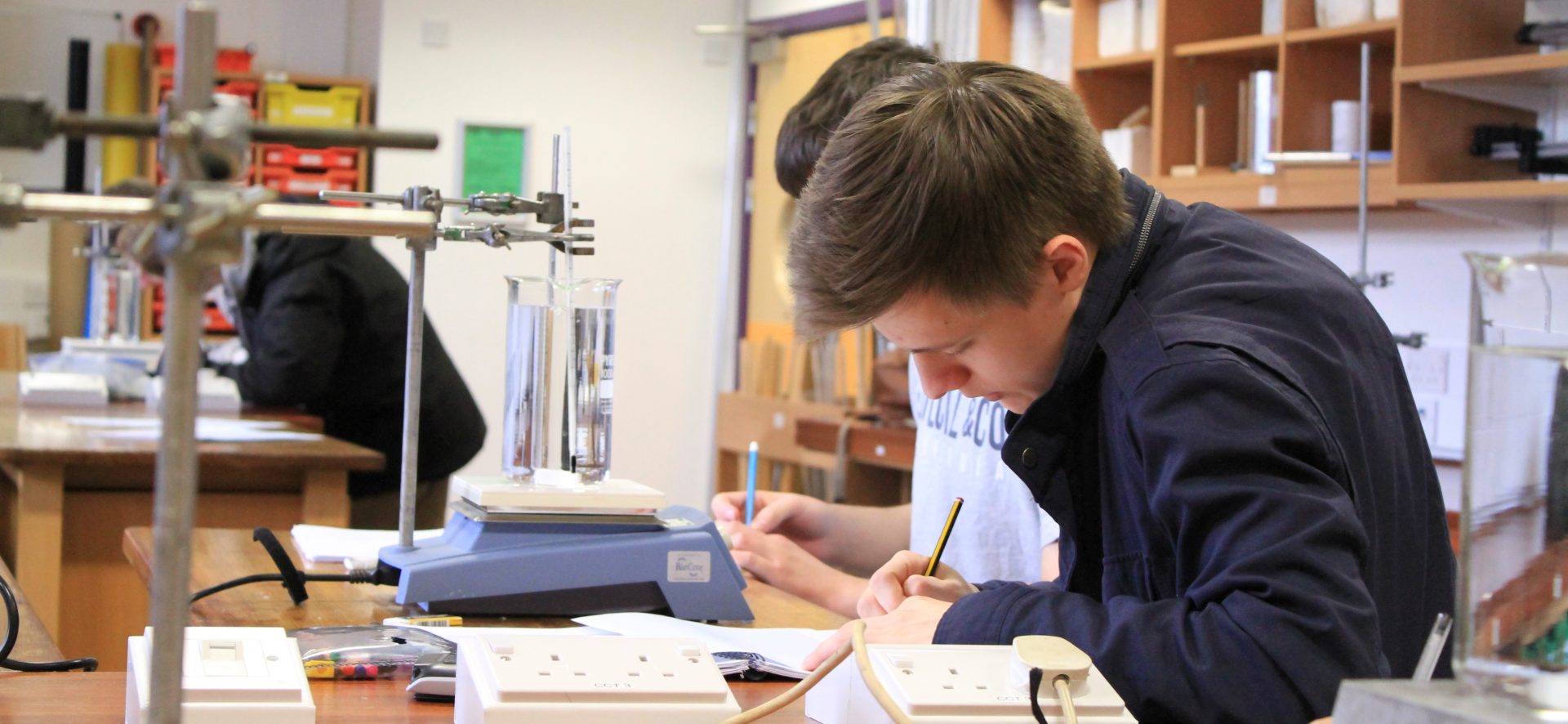
Studying Science in our state-of-the-art labs and project spaces will enable you to develop the necessary technical ability and knowledge to play your part. Whatever your talent, at QMC you will find customised support to meet your aspirations and successfully pursue your particular interests and goals.

Exam board: Pearson

MG 9755
previous arrow
next arrow
 MG 9755
Physics class
Physics Class
Biology Stats
P68 2
Biology Stats
Copy Of IMG 9111
Science Stats
Science Stats
Copy Of IMG 9103
Copy Of IMG 9097
Science Stats
Science Stats
Science Stats
previous arrow
next arrow

Where can this course take me?

Advances in Science and Technology are revolutionising the world in which we live and influence almost every aspect of our lives. With the pace of discovery and development ever increasing, the range of career opportunities for people with the skills that Science qualifications provide are unimaginably diverse and you will always be in demand.

Physicists solve ‘real world’ problems using mathematical reasoning, sound arguments and reliable evidence; skills you will develop on this course. During your studies you will learn how to perform investigations in our state of the art laboratories; you will learn how to collect and interpret data, and how to use this evidence to explain interesting phenomena. You will be required to clearly communicate the reasoning behind your conclusions using logical steps that others can follow. Physicists develop strong logical, numerical, problem solving skills that will make you an attractive prospect for many different employers from a variety of different industries. Physicists are in demand in engineering fields of all types; but also in areas as diverse as medicine, archaeology, police work, environmental science, aerospace and accountancy for example: the list is almost endless.

Luke Barretto
previous arrow
next arrow
Luke Barretto
33
9
Arya Wood
Sam Bourns
Sophie Ellis
11
4
10
2
6
37
7
1
50
previous arrow
next arrow

EXTRA-CURRICULAR ENRICHMENT OPPORTUNITIES

QMC offers extra-curricular opportunities to students to help them learn and develop their skills and knowledge, to supplement their classroom learning. As a Physics student at QMC, you are able to go on course related trips and experiences.

In second year, you are also able to attend Physics for University workshops to prepare you to study science in higher education. Every year QMC students design, build, test and enter into battle against other sixth-form students from around Europe in the annual Student Robotics competition. View more enrichment opportunities here.

Discover QMC’s Triple A+ STEM Programme>>

How is A Level Physics assessed?

A Level Physics is assessed through three written exams at the end of the two-year course:

  • Two exams, 1 hour 45 minute long, each worth 30%
  • Third exam is 2 hours 30 minutes long, worth 40%

There is no coursework contributing to your final grade, but practical work remains an important part of the course. You’ll complete a separate Practical Endorsement to demonstrate your laboratory skills, recorded as a Pass or Fail alongside your A Level result.

What are the entry requirements for A Level Physics?

Entry requirements for A Level Physics typically require:

  • Grade 6-6 or above in GCSE Combined Science
  • Grade 6 or above in GCSE Mathematics
  • Grade 5 or above in GCSE English Language

If you’ve studied the three sciences separately at GCSE, you’ll need at least a grade 6 in Physics and one other science.

You’ll also be required to study A Level Maths alongside A Level Physics.

Physics A Level FAQs

Do I have to study A Level Maths with Physics?

Yes. You’ll need to study A Level Maths alongside A Level Physics. Physics involves a significant amount of mathematical problem-solving, so the two subjects work closely together.

What subjects go well with A Level Physics?

As you’ll already be studying A Level Maths, you could choose another subject that complements your interests and future plans. Depending on where you want to progress, subjects such as Further Maths, Chemistry, Computing or another science could work well alongside Physics.

Is A Level Physics useful for engineering?

Physics can be particularly useful if you’re considering engineering or another Maths-based STEM pathway. University entry requirements vary, so you should check the requirements for any degree courses you’re considering.

What is the difference between GCSE Physics and A Level Physics?

At A Level, you’ll explore physical concepts in much greater depth and use more advanced mathematics to explain and solve problems. You’ll also develop stronger analytical, experimental and independent study skills.

Any Questions?

The Head of Department, Nick Everett

Send an Email